

25 Cozy & Stylish Room Decor Ideas for Every Home Style
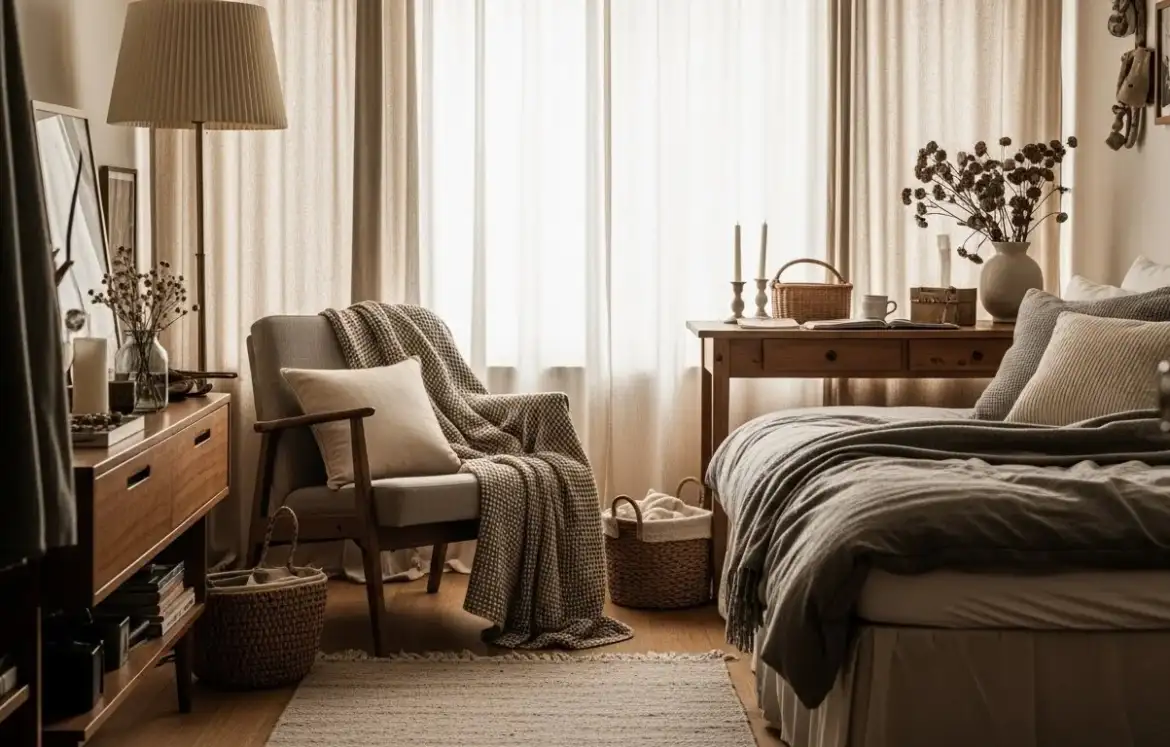
A cozy and stylish room feels comfortable, calm, and easy to live in. It doesn’t rely on expensive furniture or fast trends. Instead, it comes together through soft textures, thoughtful lighting, and small details that make everyday life feel pleasant. The ideas below focus on affordable changes that work in real homes. Each one is simple, practical, and flexible enough to suit different styles without overwhelming the space.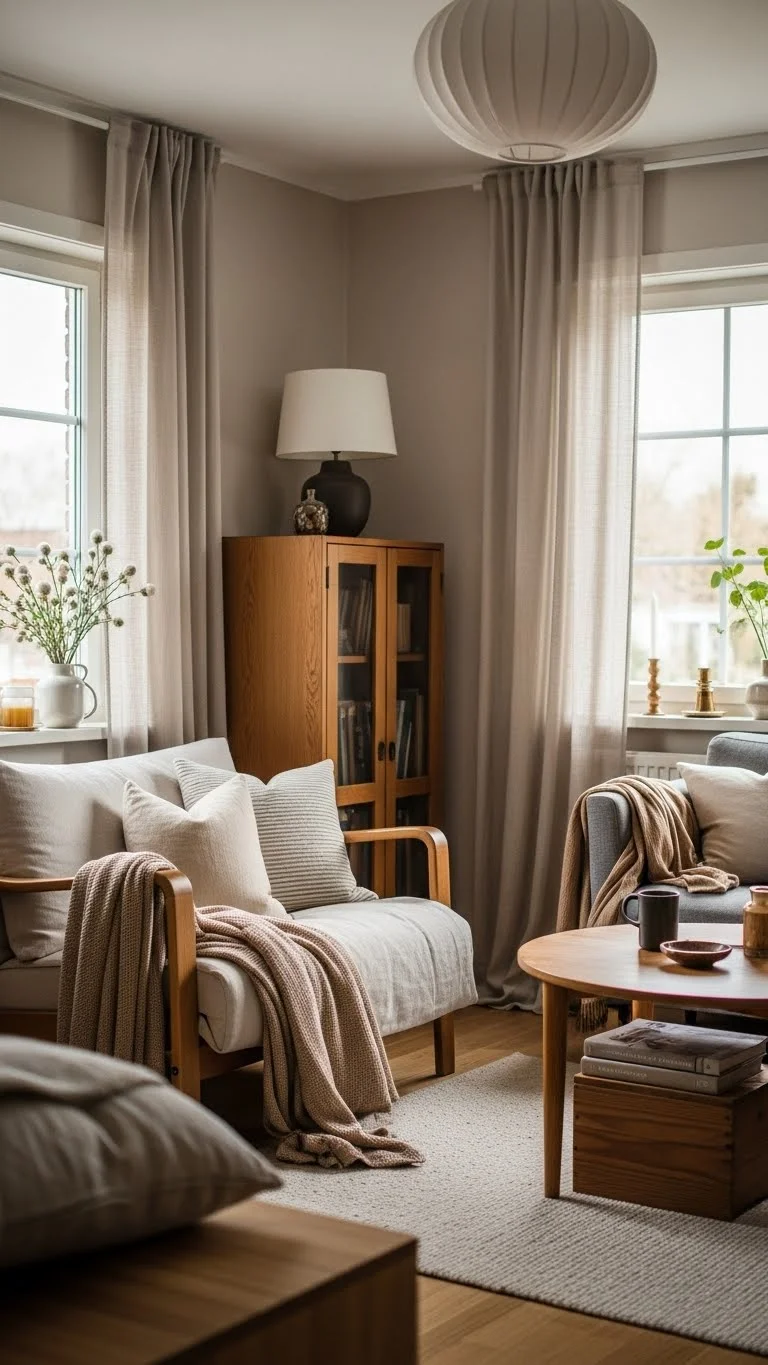
- Layered Throw Blankets on Seating

Layering throw blankets adds comfort and warmth to seating areas with very little effort. Use two or three throws in different textures. A lightweight cotton throw suits daily use, while a knit or fleece option works well for cooler evenings. Drape one over the sofa arm and fold another across the back for a relaxed, natural look. Stick to soft tones like beige, gray, cream, or muted earth shades. These colors work easily with most furniture and walls. Perfect matches aren’t required. Slight variation keeps the space feeling lived-in. For budget options, check thrift stores or clearance sections. Many throws only need washing. You can also dye old white blankets to create custom colors. Rotate blankets seasonally to keep the room comfortable year-round.
- Soft Table Lamps Instead of Harsh Overhead Light

Overhead lighting can feel sharp and uncomfortable, especially at night. Table lamps create softer light that makes a room feel calmer and more inviting. Always choose warm bulbs. Bright white light often feels too strong for living spaces. Place lamps at different heights around the room. One near the sofa, another on a side table, or even a small lamp on a shelf, helps spread light evenly. This layered lighting feels gentle and relaxing. Affordable lamps are easy to find second-hand. Focus on the lamp base. Shades can be replaced easily. Fabric or linen shades soften light better than plastic ones. A simple DIY upgrade is covering a plain lampshade with thin fabric using fabric glue. Keep the fabric loose so light filters through softly. Turning off overhead lights in the evening and relying on lamps can completely change how your room feels, without changing anything else.
- Neutral Area Rugs That Ground the Space
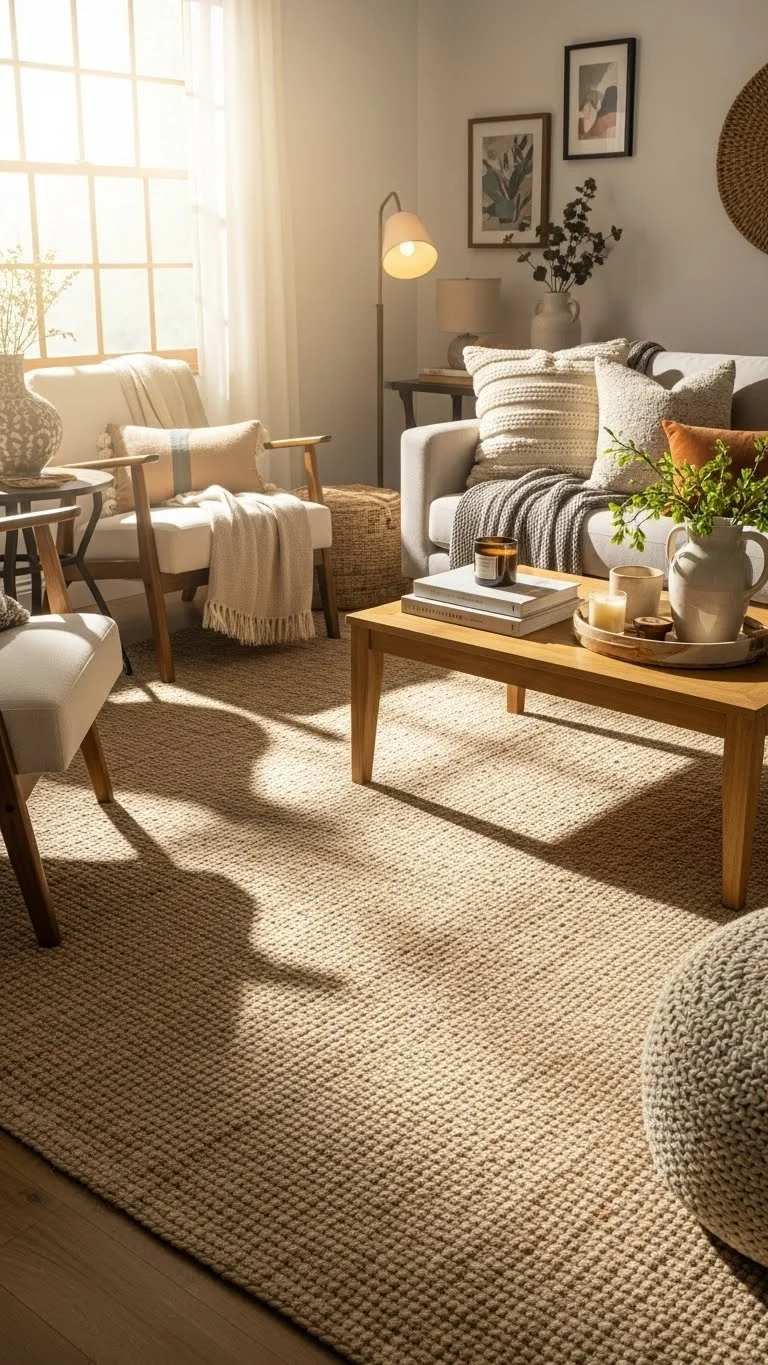
An area rug helps define a room and adds warmth underfoot. Neutral rugs work well with most furniture styles and remain useful even when décor changes. Flatweave or low-pile rugs are practical choices, especially in busy areas. If you’re decorating on a budget, focus on size first. A larger plain rug usually looks better than a smaller patterned one. It helps furniture feel connected and makes the room feel calmer. Layering rugs can also save money. Place a smaller patterned rug over a simple jute or cotton rug. This adds texture and interest without buying an expensive rug. If you already own rugs, try moving them between rooms. A rug can feel completely different in a new space. This simple swap refreshes the look of your home without spending anything.
- Textured Accent Pillows for Everyday Comfort
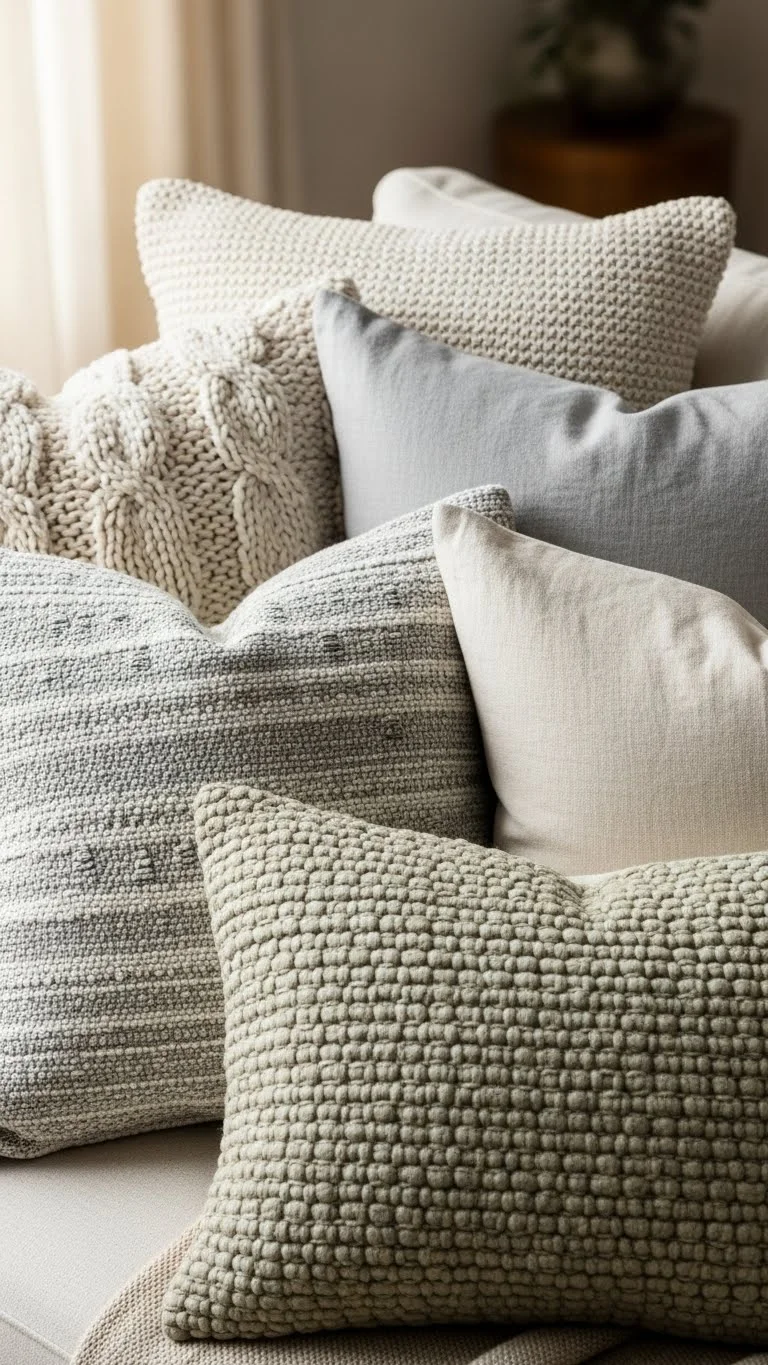
Accent pillows add comfort quickly and are easy to change. Texture is more important than bold patterns. Woven, linen, boucle, or lightly knit fabrics add depth without making the space feel busy. Limit the color palette to two or three shades. This keeps the room calm and balanced. Neutral tones work especially well if your sofa or bedding already has color. To save money, buy pillow covers instead of full pillows. Covers take up less storage space and allow seasonal changes. A simple switch can refresh the room in minutes. For a DIY option, sew envelope-style covers from old curtains or fabric remnants. Basic sewing skills are enough. This lets you control fabric choice and size while keeping costs low. Well-chosen pillows make seating areas feel more comfortable and inviting without overwhelming the space.
- Curtains That Soften Hard Edges
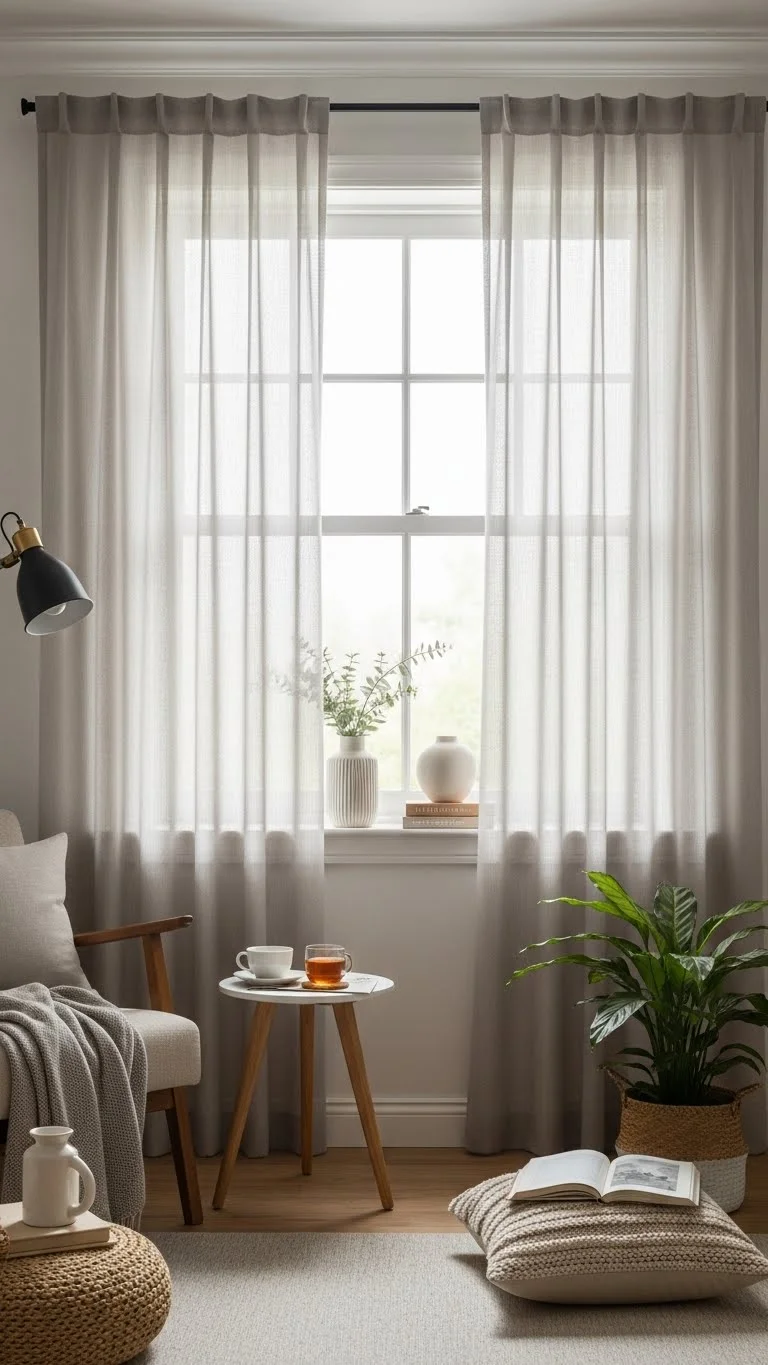
Curtains add softness and warmth to rooms with hard window lines. Light-filtering fabrics allow daylight to enter while creating privacy and comfort. They also help rooms feel more finished. Hang curtain rods higher than the window frame to make ceilings appear taller. Extend the rod wider than the window so the curtains frame the space instead of blocking light. Budget curtain panels are easy to find. Use iron-on hem tape to adjust the length instead of paying for alterations. Solid colors are easier to reuse if you move or change décor later. Wash curtains before hanging them. This softens the fabric and helps it drape naturally. Curtains also help with temperature control, making rooms feel more comfortable throughout the year with very little effort.
- Personal Photo Displays That Feel Relaxed

Personal photo displays make rooms feel familiar and welcoming. Instead of covering entire walls, choose a small group of meaningful photos. This keeps the space calm and avoids visual overload. Printing photos in the same size creates order, even when images differ. Black-and-white photos work especially well because they reduce color distraction and suit most décor styles. Use simple frames so attention stays on the photos. Thrift stores often have sturdy frames at low cost. Painting them one neutral color helps mismatched styles feel cohesive. Shelves offer flexibility since photos can be rearranged without tools. Lean frames slightly for a relaxed look. Leave space between pieces so each image stands out, and the display feels balanced and personal.
- Indoor Plants That Bring Calm
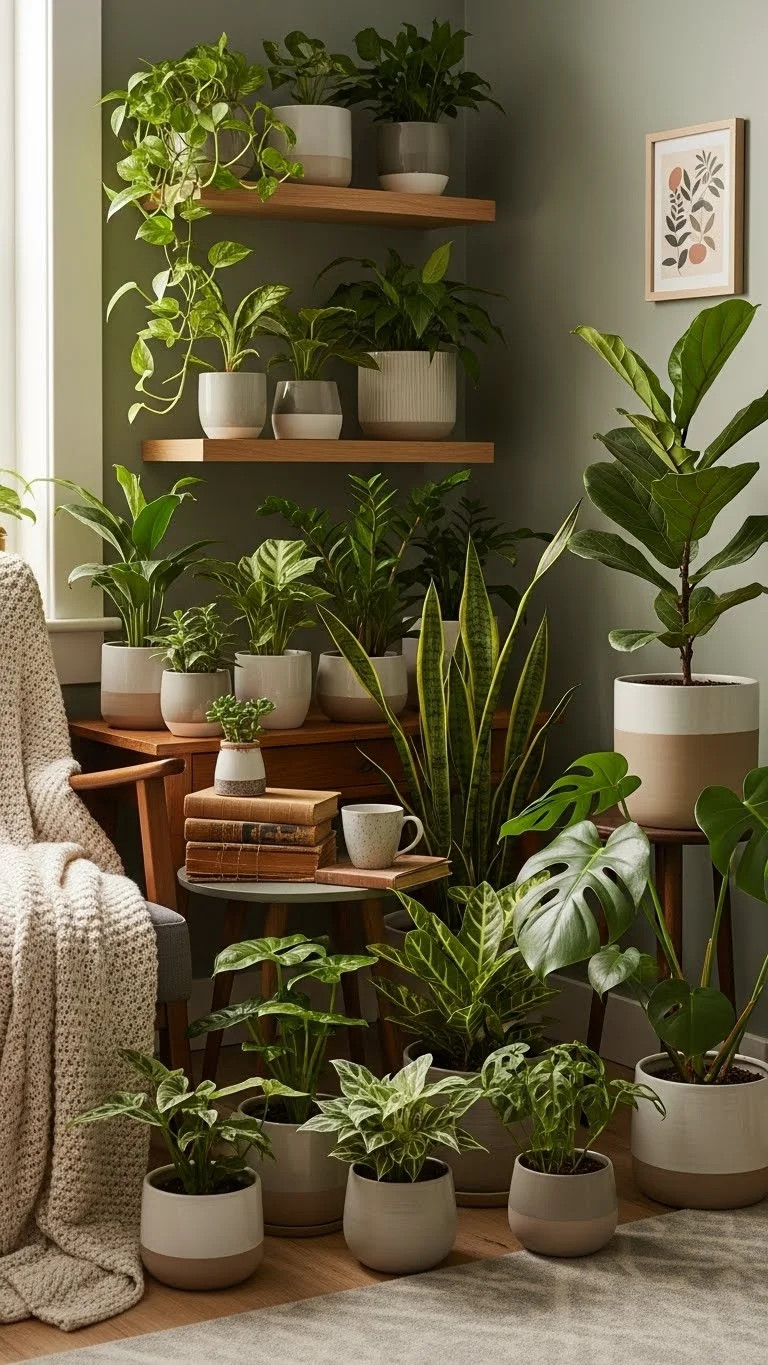
Indoor plants soften rooms and add natural color without much effort. Start with easy-care plants like pothos, snake plants, or peace lilies. These tolerate low light and irregular watering, making them suitable for busy homes. If you want to save money, grow plants from cuttings. Many houseplants root easily in water. Place cuttings in clear jars or glasses for a simple, clean look. This costs nothing and slowly fills your space with greenery. Keep planters simple. Neutral ceramic or terracotta pots work with most styles and don’t distract from the plant itself. Avoid using too many different pot colors in one room. Place plants near seating areas, shelves, or windows where they naturally draw the eye. Even one plant can soften a corner and make the room feel calmer. Regular trimming keeps plants tidy and helps them stay healthy without extra cost or effort.
- A Simple Cozy Reading Corner
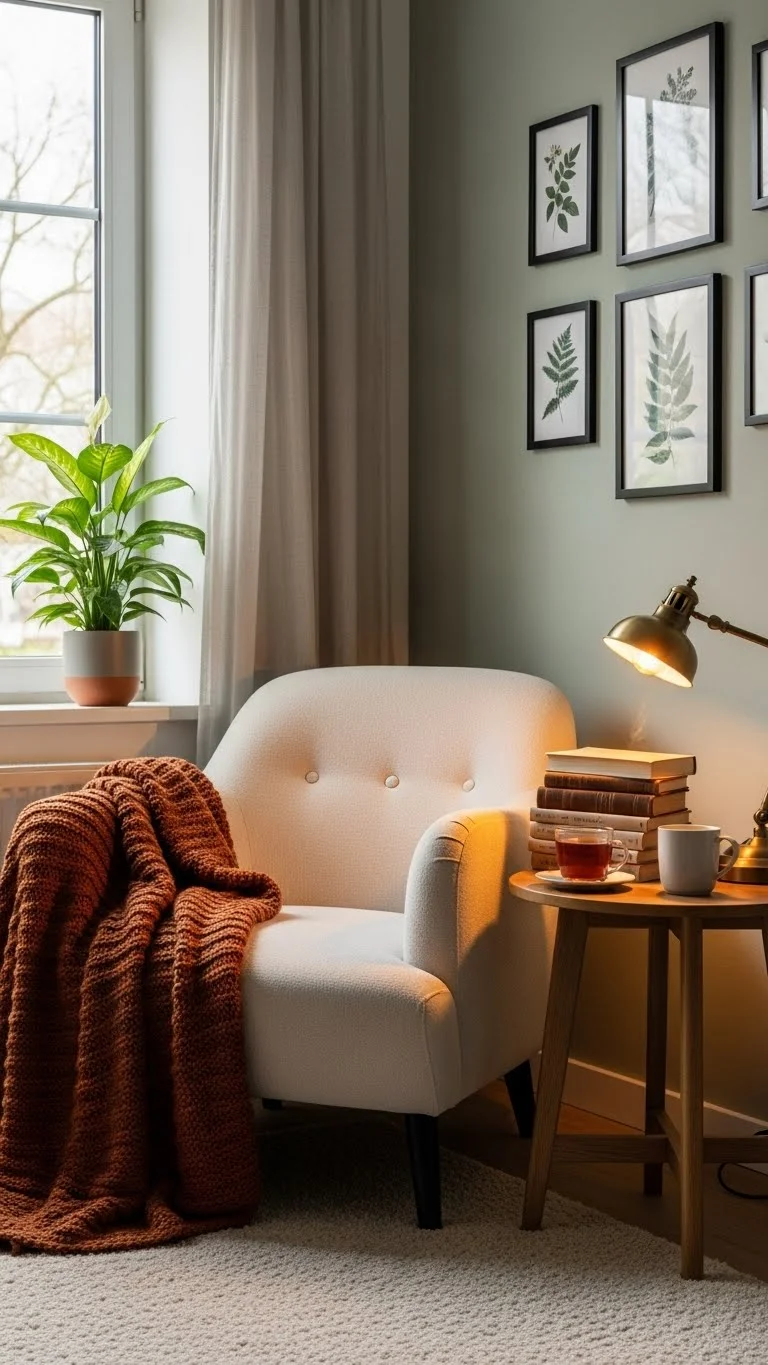
A reading corner creates a quiet place to slow down. You don’t need much space. One comfortable chair, a lamp, and a small surface are enough. Choose a chair that supports your back and feels comfortable for longer sitting. Lighting is important. A table or floor lamp with a warm bulb works best. Place the light slightly behind or to the side of the chair to avoid glare. This keeps reading comfortable at night. Use items you already own. A stool, crate, or small basket can hold books. Stack a few favorites instead of filling shelves. This keeps the corner from feeling cluttered. Add a throw blanket for warmth and comfort. If possible, place the chair near a window for natural light during the day. This small setup encourages quiet moments and makes the room feel more welcoming without adding clutter or spending much money.
- Wooden Accents That Add Warmth
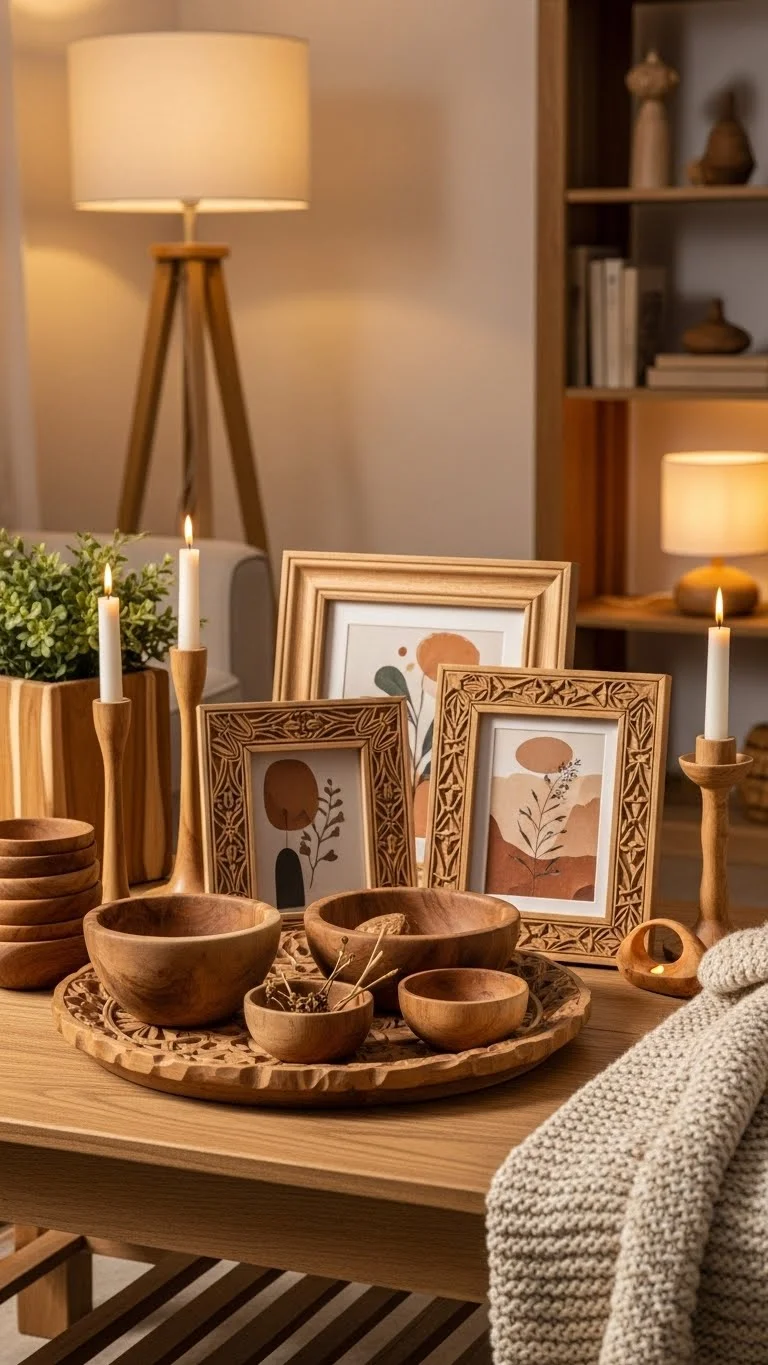
Wood subtly brings warmth and comfort. You don’t need large wooden furniture to get this effect. Small accents work just as well. Trays, bowls, picture frames, or small stools add texture and balance to a room. Second-hand shops are great places to find solid wood items. Many pieces only need light sanding and a coat of oil to look clean and cared for. This quick refresh keeps costs low and adds character. Avoid matching all wood tones exactly. Mixing light and medium finishes feels relaxed and natural. Too much matching can make a room feel stiff. Wooden trays are useful for grouping small items like remotes or candles. This keeps surfaces tidy while adding warmth. These accents work well with fabric, metal, and glass, making them easy to move between rooms as needed.
- Candles for a Gentle Atmosphere
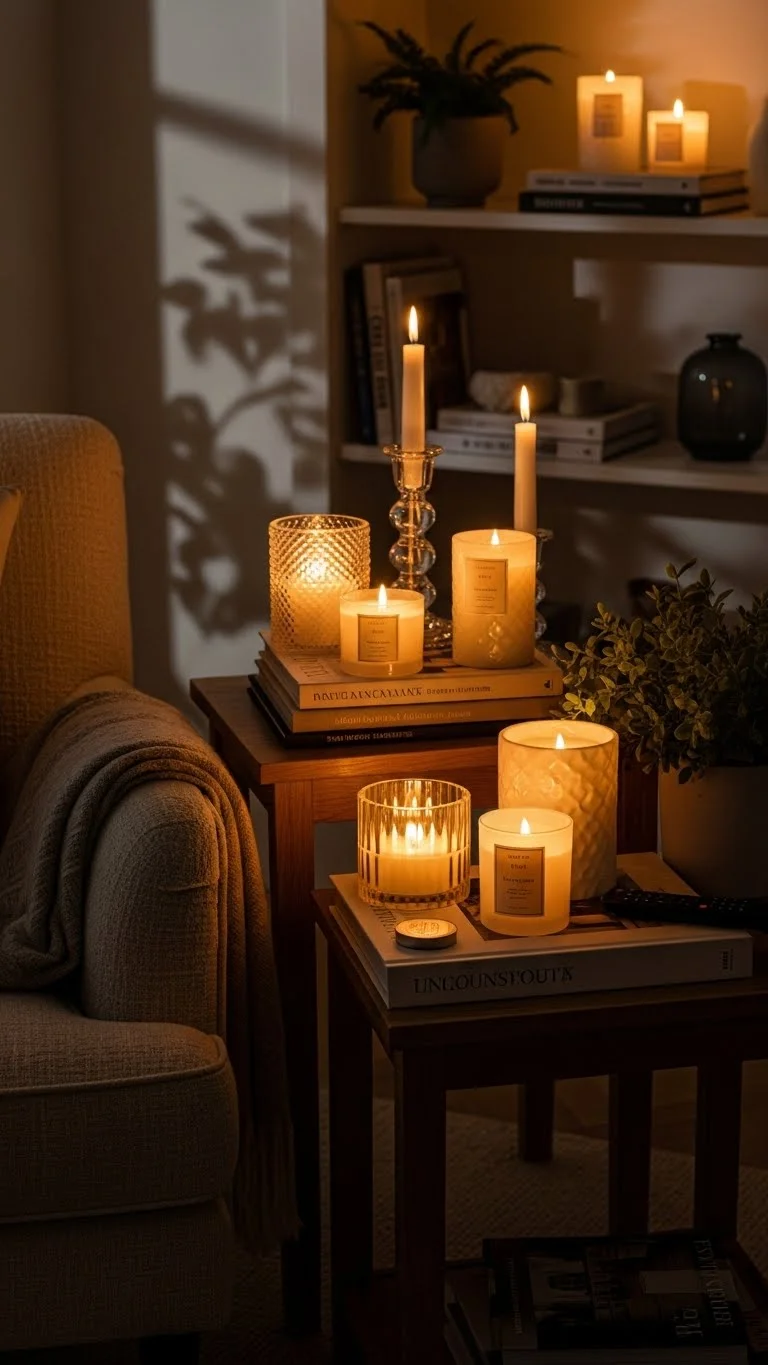
Candles create comfort through soft light and subtle scent. Simple containers work best. Glass or ceramic holders fit easily with most décor styles and don’t distract from the glow. You don’t need expensive scented candles. Unscented candles paired with essential oils placed nearby offer a low-cost option. This gives you control over scent strength and avoids overpowering smells. Group candles in odd numbers on a tray or shallow bowl. This keeps wax contained and looks natural. Place them on stable surfaces away from drafts. Candles work well in living rooms, bedrooms, and bathrooms during quiet moments. Turn off overhead lights and let candlelight set the mood. Always trim wicks and never leave candles unattended. Used thoughtfully, candles add warmth and calm without clutter or high expense.
- Open Shelving Styled with Breathing Room
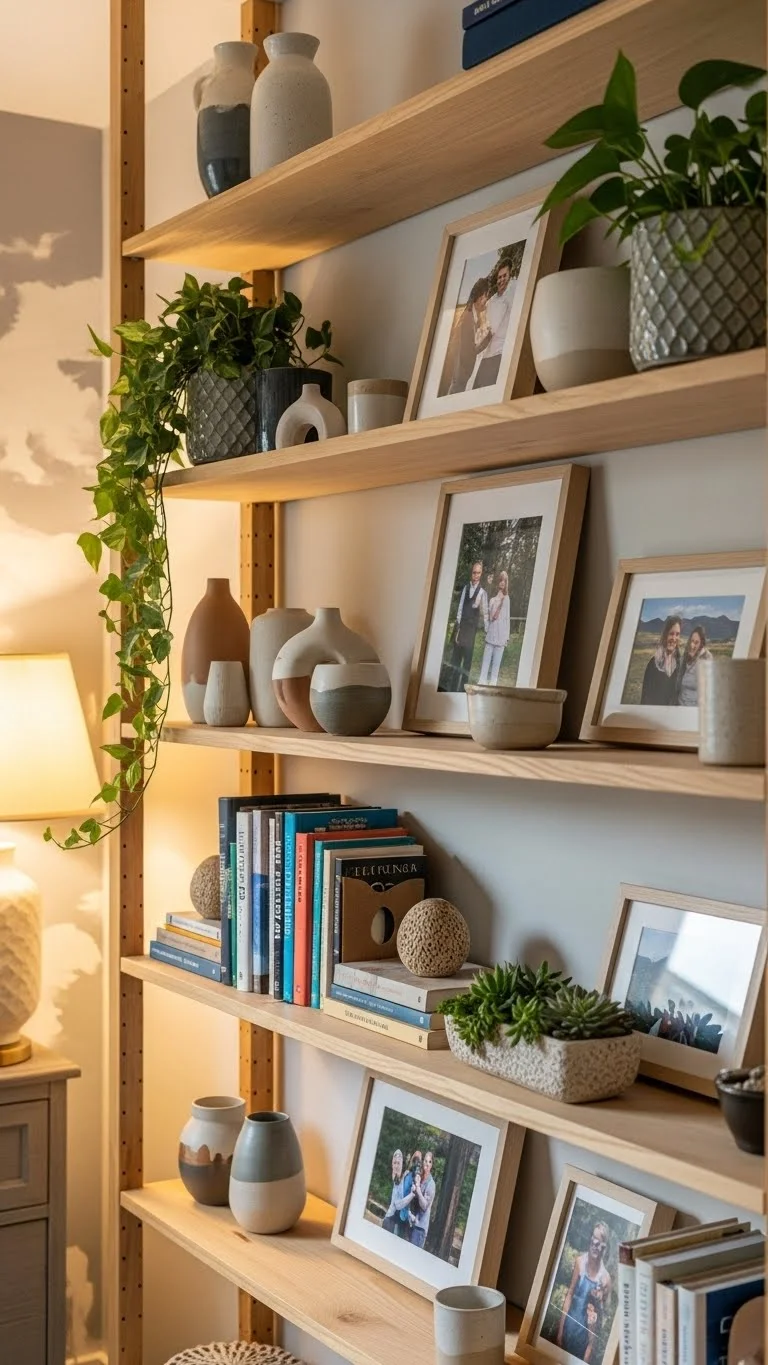
Open shelving feels warm and personal when styled with restraint. Leave space between items so shelves don’t feel crowded. Place a few books both horizontally and vertically to create variation. Add one or two small objects, then stop. Space matters. Use items you already own. Simple bowls, framed photos, small plants, or candles work well. Avoid filling shelves with objects that don’t bring comfort. Too many items can make the space feel busy. Stick to a limited color range. Neutral tones with one soft accent color keep shelves calm and easy on the eyes. Rotate shelf items every few months by swapping pieces from another room. This keeps shelves feeling updated without spending money.
- Soft Bedding Layers for Everyday Comfort
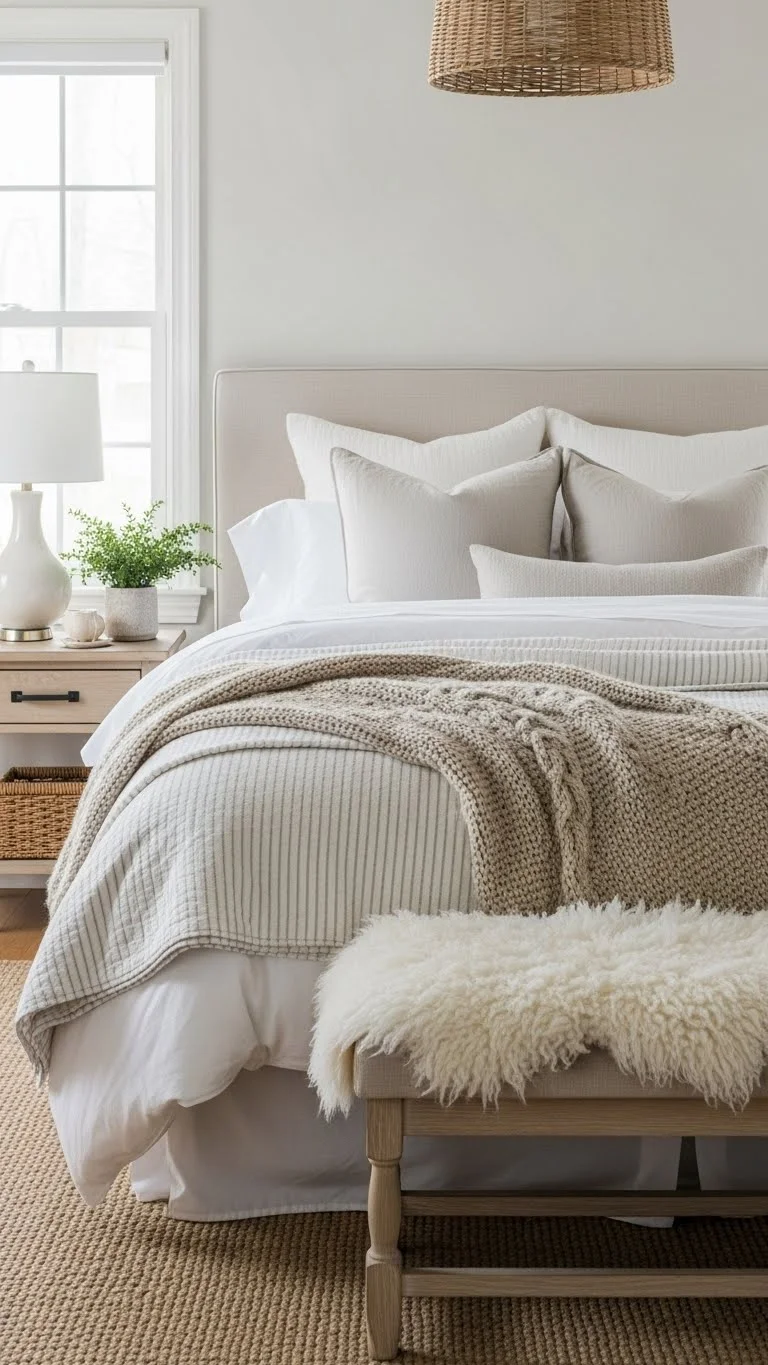
Layered bedding makes a bedroom feel welcoming and comfortable. Start with simple sheets in a neutral color. Add a lightweight quilt or coverlet for daily use. Finish with a throw blanket folded at the foot of the bed. This creates softness without feeling heavy. You don’t need a full bedding set. Mixing pieces from different brands can save money and still look pulled together. Look for sales or clearance sections for quilts and throws. Choose fabrics that feel good against the skin. Cotton and linen breathe well and are easy to wash. Avoid too many patterns. Solid colors make layering easier and keep the room calm. Adjust layers with the seasons. Use lighter layers in warm months and add heavier blankets when it’s cooler. This approach keeps your bedroom comfortable year-round without constant buying. Simple bedding layers support better rest and make the room feel cared for.
- Decorative Trays That Create Order
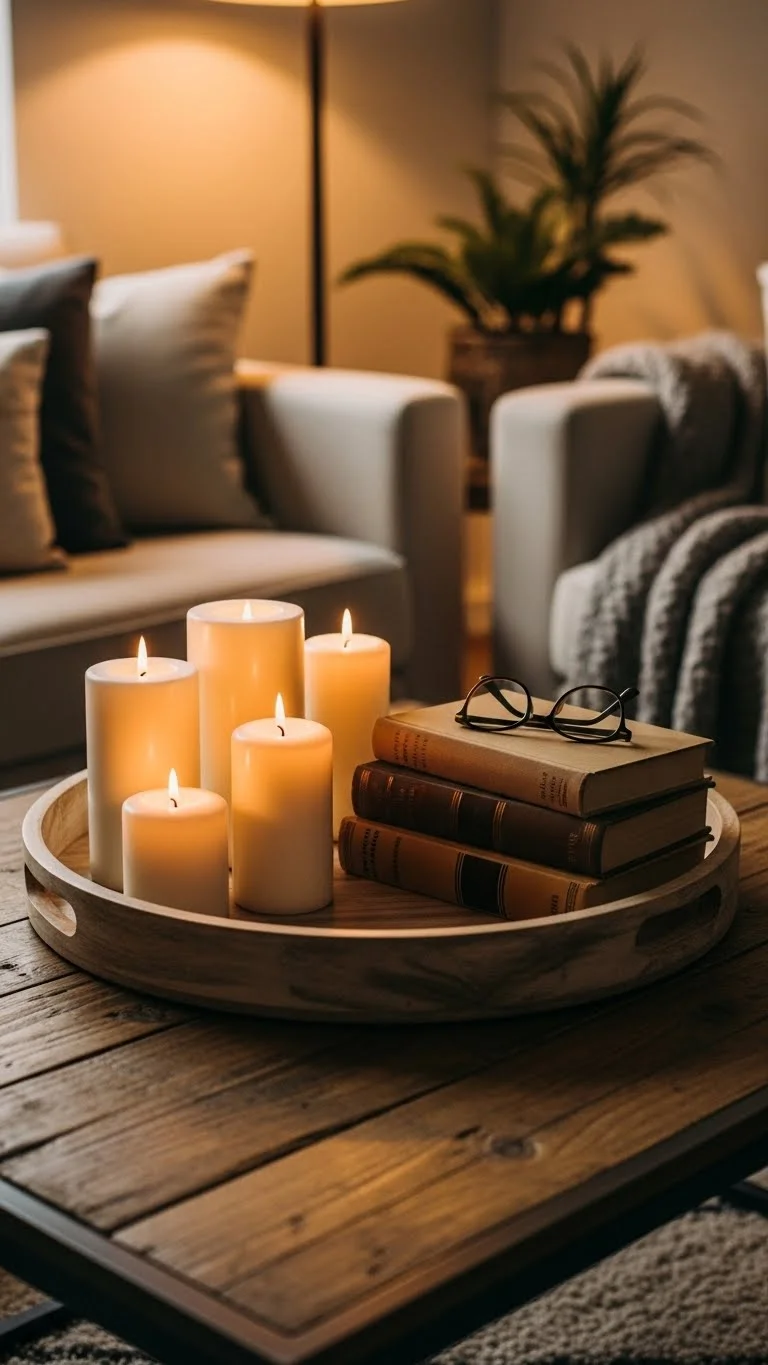
Decorative trays help organize everyday items while adding structure to surfaces. They work well on coffee tables, nightstands, dressers, or ottomans. A tray groups small objects so they feel intentional instead of scattered. Choose a tray that fits the surface. Too large feels crowded. Too small doesn’t serve its purpose. Wood, metal, or woven trays all work depending on the room style. You can make a tray yourself using an old picture frame and small handles. This DIY option costs very little and lets you choose the size and finish. Use trays to hold candles, books, remotes, or personal items you use often. Limit each tray to a few objects so it stays tidy. This simple addition keeps rooms feeling organized and calm without constant cleaning.
- Wall Mirrors That Reflect Light
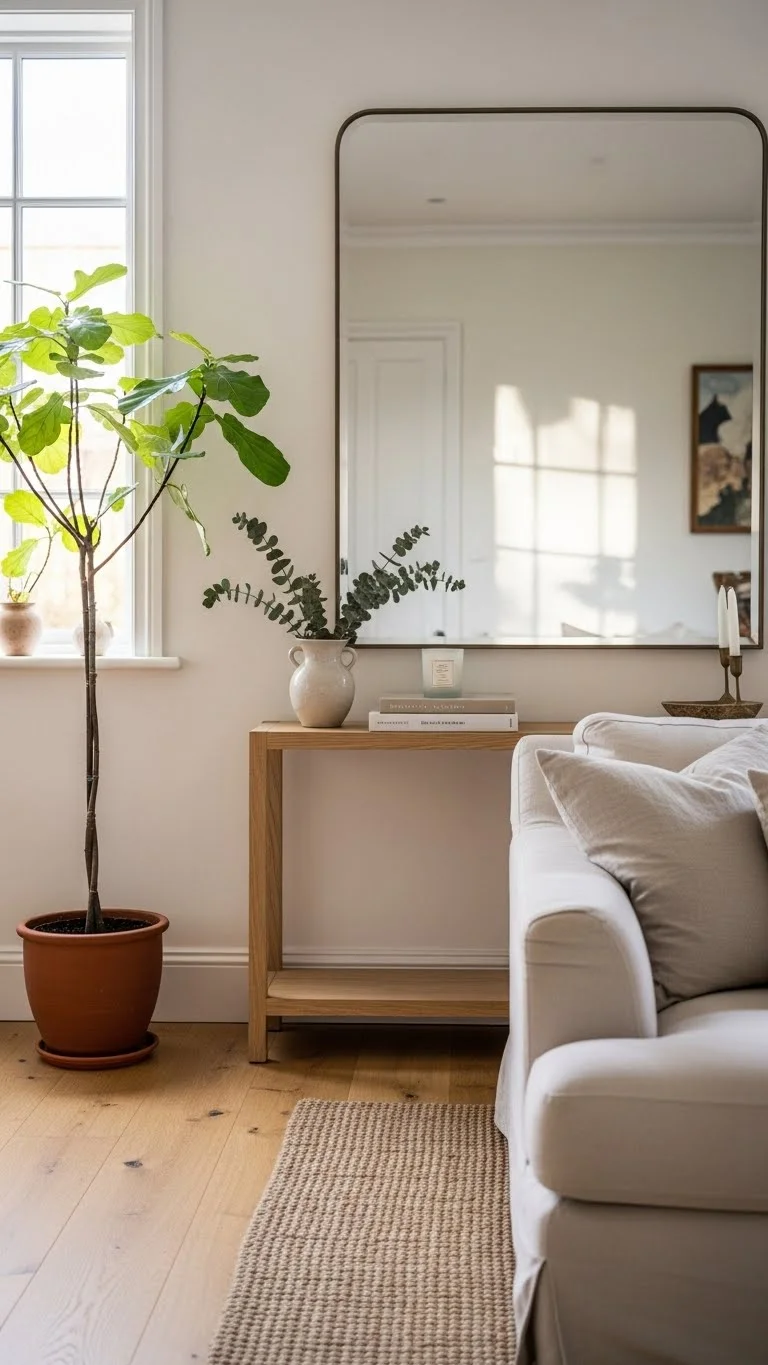
Mirrors help rooms feel brighter and more open by reflecting light. They are especially useful in small or dim spaces. Simple mirror frames work best and are easy to style. Second-hand stores often have mirrors at low prices. Look past scratches or dated frames. A coat of paint can refresh the frame easily. Place mirrors across from windows or near light sources for the best effect. This helps bounce natural light deeper into the room. Avoid placing mirrors where they reflect clutter. Keep the surrounding area simple so the reflection feels calm. A well-placed mirror improves light and balance without taking up floor space.
- Cozy Floor Seating for Casual Comfort
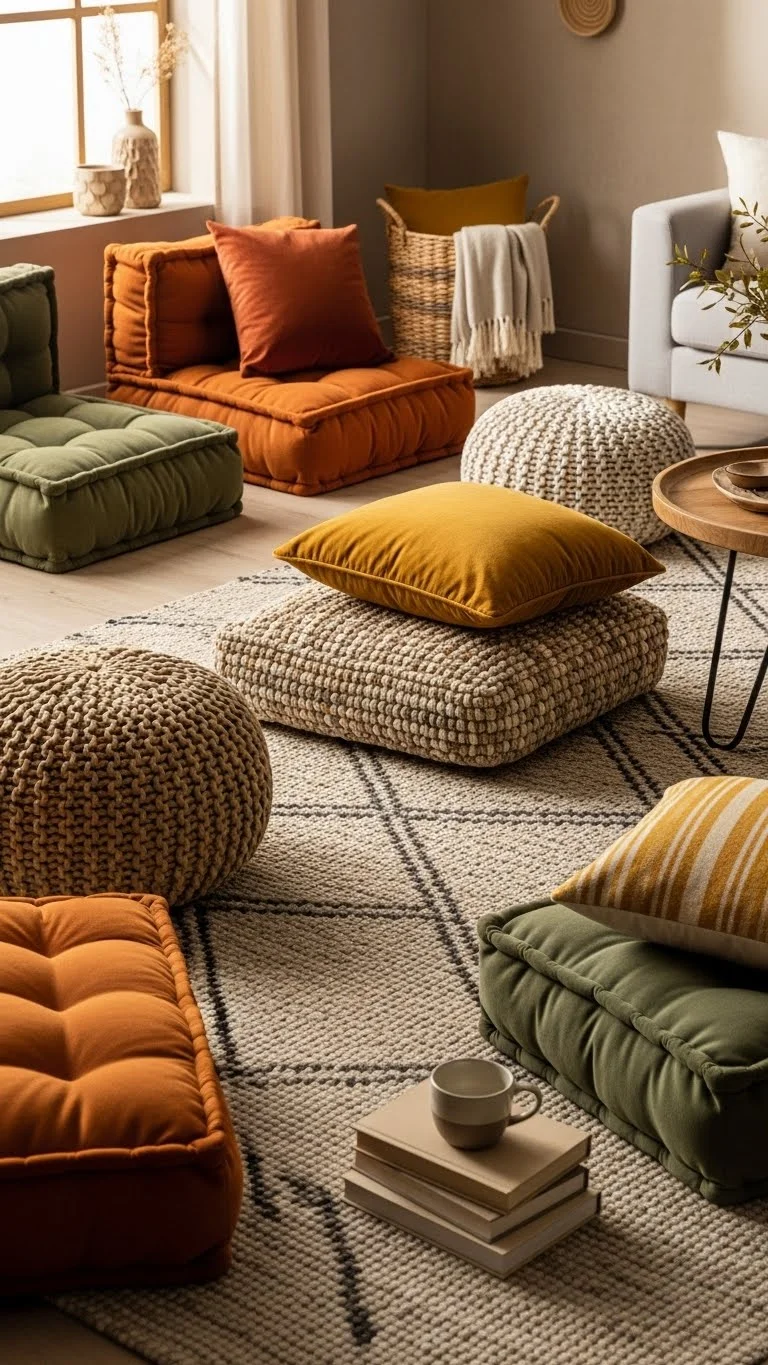
Floor seating adds comfort and flexibility, especially in small spaces. Poufs, floor cushions, or low stools work well for casual seating and gatherings. They can be moved easily and stored when not in use. Choose firm cushions that still feel soft. Neutral colors keep them easy to pair with existing décor. Place them on a rug for added comfort and warmth. A budget-friendly option is making covers from fabric remnants or old curtains. Fill them with spare pillows or foam pieces. This keeps costs low and allows custom sizing. Floor seating works well in living rooms, reading corners, or bedrooms. It encourages relaxed use of space and adds a cozy, informal feel without adding bulky furniture.
- Soft Window Treatments That Warm the Room
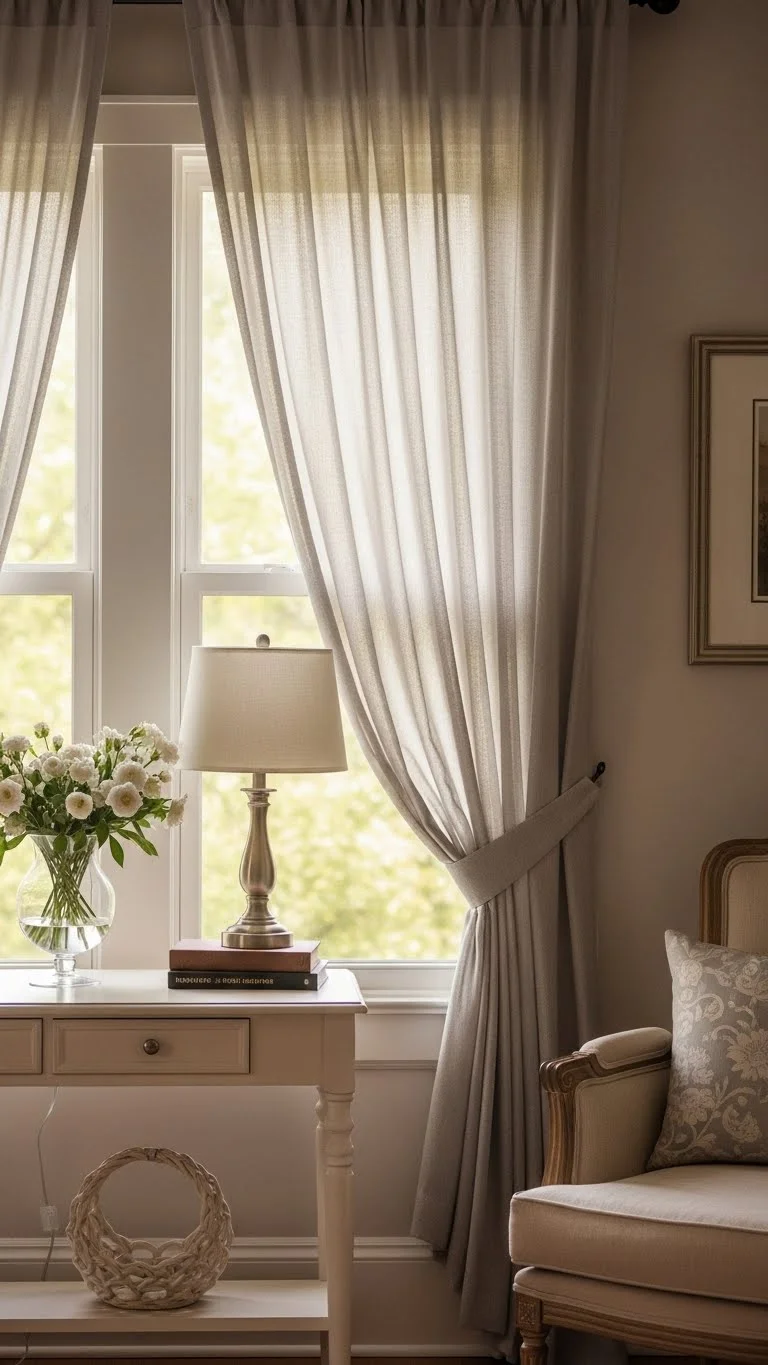
Window treatments change how a room feels almost instantly. Soft curtains or simple fabric panels add warmth and privacy without making the space feel closed in. Start with lightweight materials like cotton or linen. These allow light to filter through while still softening the window. You don’t need custom curtains. Ready-made panels are affordable and easy to install. Choose a neutral color so they work with different styles over time. Hanging curtains slightly wider and higher than the window can make the room feel taller.
If the budget is tight, use fabric yardage with clip rings. This option lets you swap fabrics easily and wash them at home. Even a simple rod with basic hardware works well. Avoid heavy patterns if the room already has visual detail. Plain or lightly textured fabric keeps things calm. Soft window treatments help rooms feel comfortable during the day and cozy at night with very little effort.
- Accent Chairs That Add Character
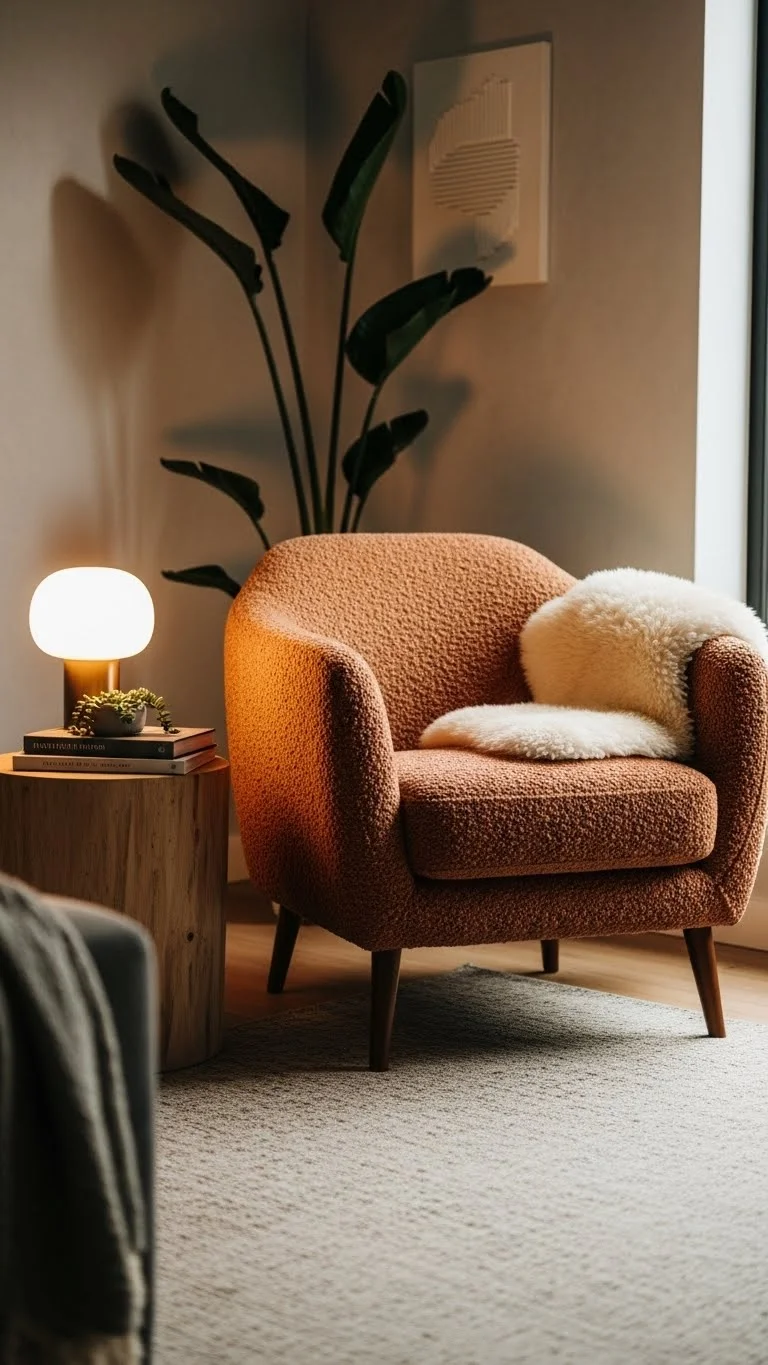
An accent chair adds seating and personality without taking over the room. It can fill an empty corner or sit near a window or bookshelf. Look for simple shapes that fit your space rather than large statement pieces. Second-hand stores often have solid chairs that only need new fabric or cushions. A slipcover or throw blanket can change the look quickly and keep costs low. Neutral colors help the chair work with different décor styles. Place a small table or floor lamp next to the chair to make it useful. This creates a spot for reading, resting, or quiet time. The chair doesn’t need to match other furniture exactly. Similar tones or materials are enough. Accent chairs give rooms balance and function. They also make spaces feel more welcoming by offering another place to sit without crowding the layout.
- Area Rugs That Define Space

Area rugs help define zones, especially in open rooms. They add warmth underfoot and soften hard floors. A rug also helps furniture feel connected rather than floating apart. Choose a rug that fits the seating area. Front legs of sofas and chairs should sit on the rug for a pulled-together look. Neutral rugs with light texture are easy to live with and hide wear better than bold patterns. Budget rugs can still look good. Flatweave rugs or low-pile options are usually more affordable and easier to clean. Layering a smaller patterned rug over a larger plain one adds depth without buying one large piece. Rotate rugs occasionally to balance wear. Vacuum regularly to keep fibers looking even. A well-placed rug makes rooms feel grounded and comfortable without adding clutter.
- Wall Art Made from Personal Pieces
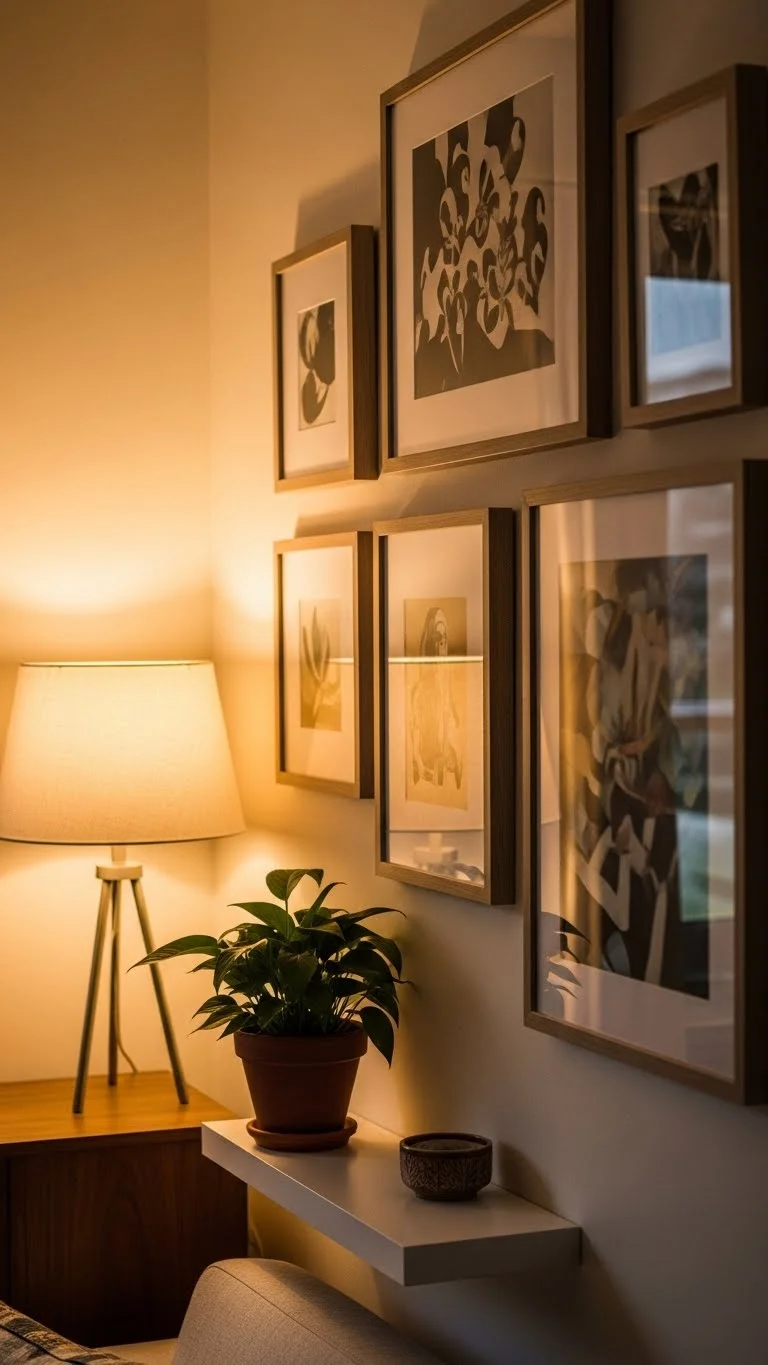
Wall art feels more meaningful when it reflects personal moments. Photos, postcards, children’s drawings, or travel prints work well. Simple frames keep attention on the pieces themselves. You don’t need expensive prints. Print photos at home or use online services for low-cost enlargements. Thrifted frames can be painted or left mismatched for a relaxed look. Lay frames on the floor before hanging to plan spacing. This avoids extra holes and keeps the layout balanced. Leave some space between frames so the wall doesn’t feel crowded. Changing wall art over time keeps rooms feeling updated. Swap photos seasonally or rotate artwork from other rooms. Personal wall art makes spaces feel lived-in and welcoming without spending much.
- Scented Elements That Shape Mood
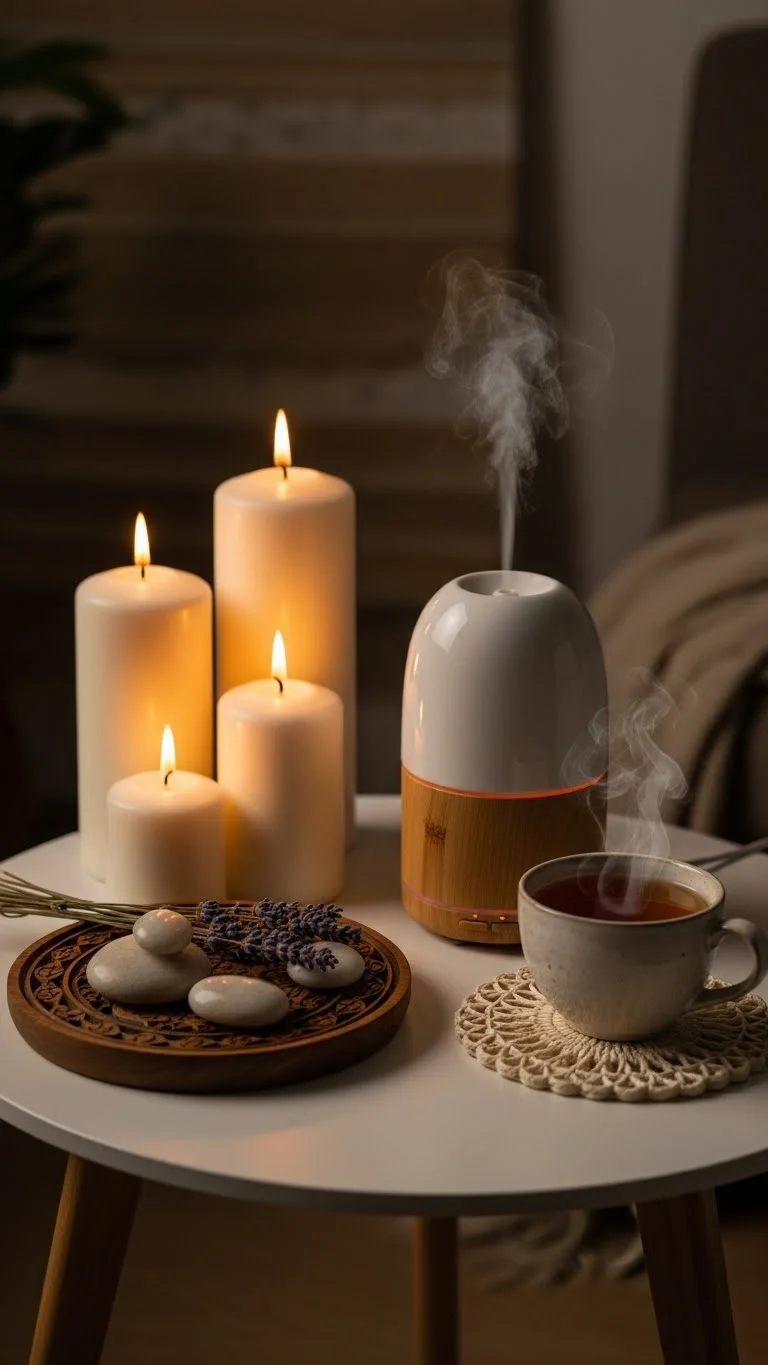
Scent plays a quiet role in how a room feels. Candles, diffusers, or simmer pots can shape the mood without changing anything visually. Choose gentle scents that don’t overpower the space. Soy candles or essential oil diffusers are affordable and last longer. One scent per room keeps things simple. Soft notes like vanilla, citrus, or light woods work well for daily use. You can make simmer pots using citrus peels, herbs, and spices. Heat them gently on the stove for a cozy feel. This option costs almost nothing and uses items you already have. Store scented items neatly when not in use. A small tray keeps them organized. Thoughtful scent choices help rooms feel calm and comfortable every day.
- Bedside Tables Styled for Daily Use
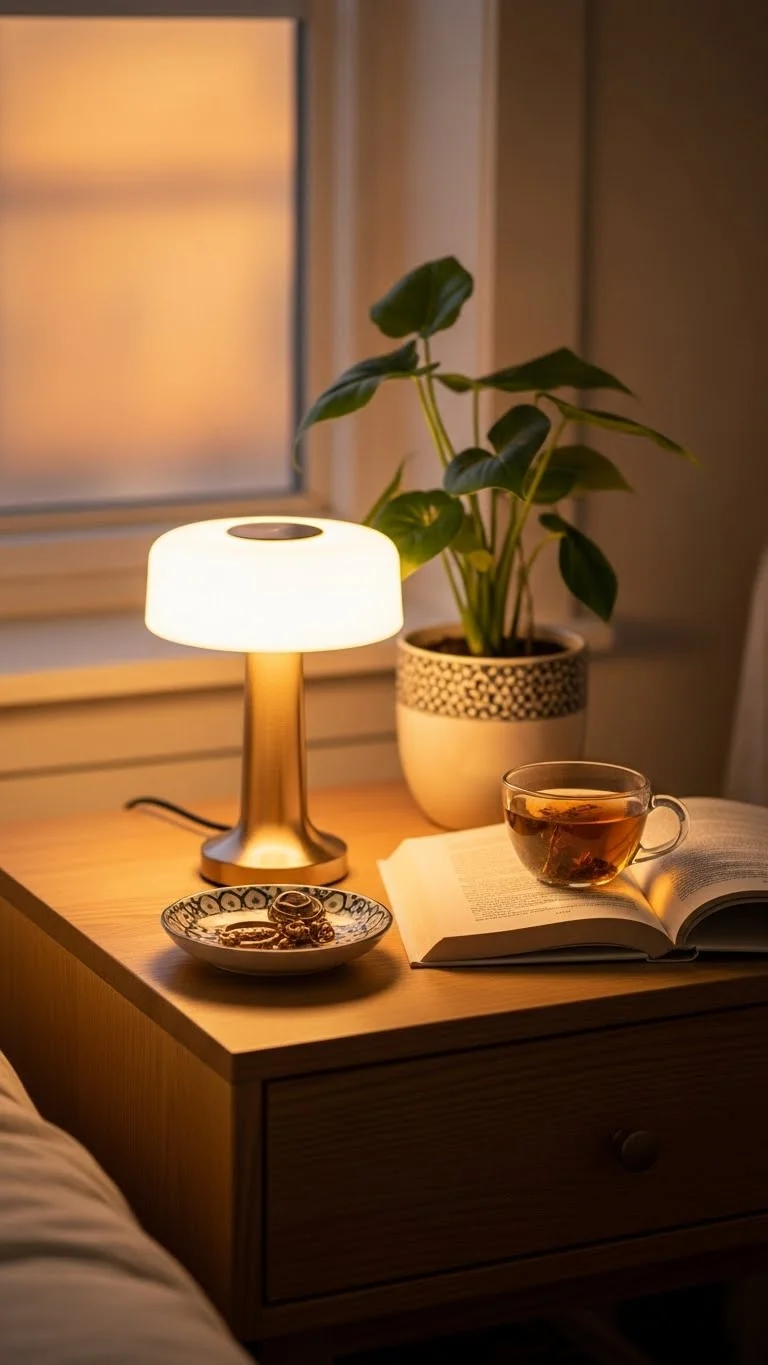
A bedside table works best when it balances style and daily function. It should hold only what you actually use at night. A lamp, a book, and a small dish for essentials are usually enough. Keeping it simple helps the bedroom feel calm. You don’t need a matching pair. Different tables on each side of the bed can still look intentional if they share a similar height or color. This approach also saves money. One side could be a stool or a small shelf. Use trays or bowls to group small items. This prevents clutter and makes cleaning quicker. Avoid piling objects high. Clear space matters just as much as what you place there. If storage is limited, choose tables with a drawer or shelf. You can also repurpose small cabinets or crates. A tidy bedside setup supports better rest and keeps mornings easier.
- Neutral Color Palettes That Feel Calm
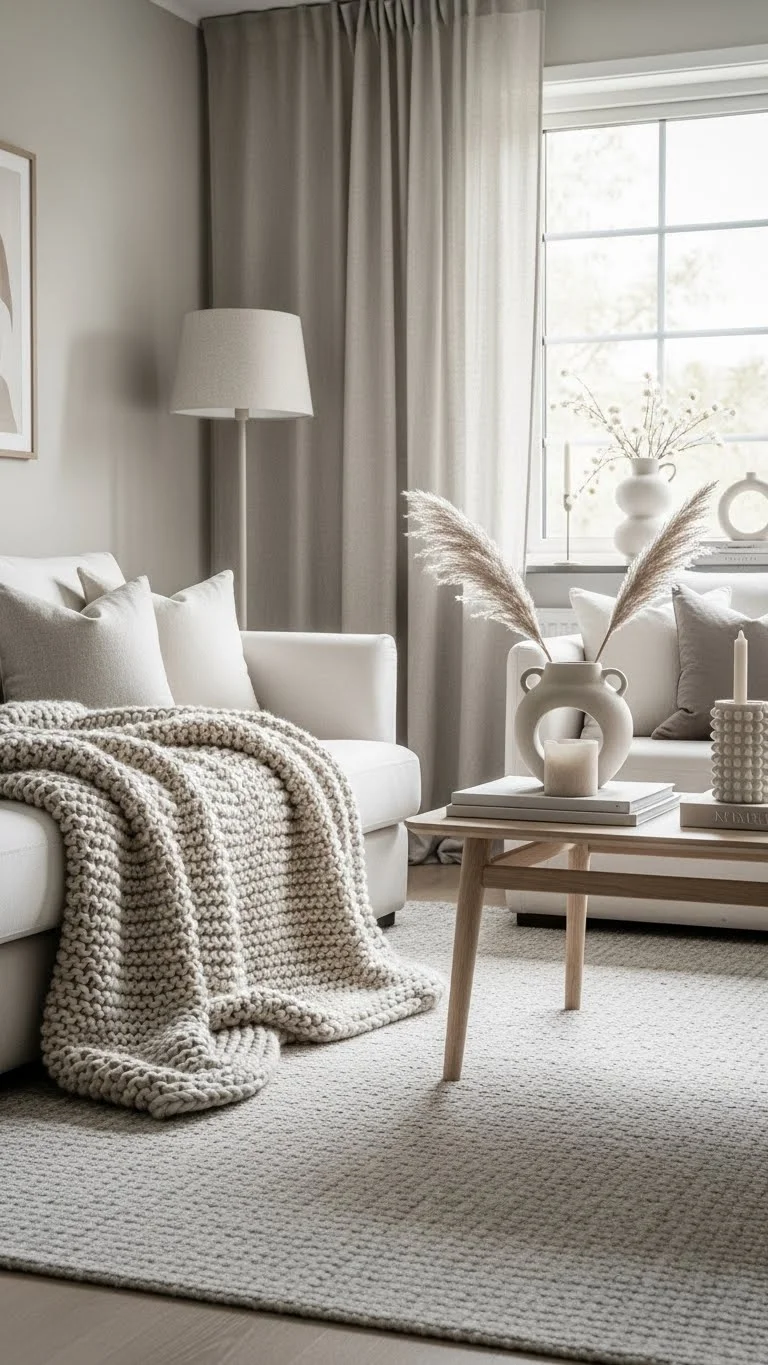
Neutral colors help rooms feel relaxed and easy to live in. Shades like beige, cream, soft gray, and warm white work well across different spaces. They also make it easier to mix furniture and décor over time. You don’t need to repaint everything. Add neutral tones through pillows, throws, rugs, or curtains. These pieces can be changed easily and cost less than large updates. Mix textures so the room doesn’t feel flat. Pair smooth fabrics with knits, wood, or woven items. This adds warmth while keeping the color range simple. Neutral palettes also make rooms feel brighter by reflecting light. They provide a quiet backdrop that allows personal items to stand out without visual clutter. This makes spaces feel settled and comfortable day after day.
- Small Side Tables That Fill Gaps

Small side tables help rooms feel complete. They fill awkward gaps beside sofas or chairs and add useful surfaces for daily items. Choose tables that fit the space without blocking walkways. You can repurpose many items as side tables. Stools, crates, or stacked books work well and cost very little. A simple tray on top creates a stable surface. Keep styling minimal. One or two items, like a mug, book, or lamp, are enough. Overfilling makes the table feel cluttered and less useful. Lightweight tables are easy to move and adapt to different layouts. This flexibility helps small rooms work better. Side tables may seem minor, but they improve comfort and everyday convenience.
- Textured Wall Finishes Without Paint
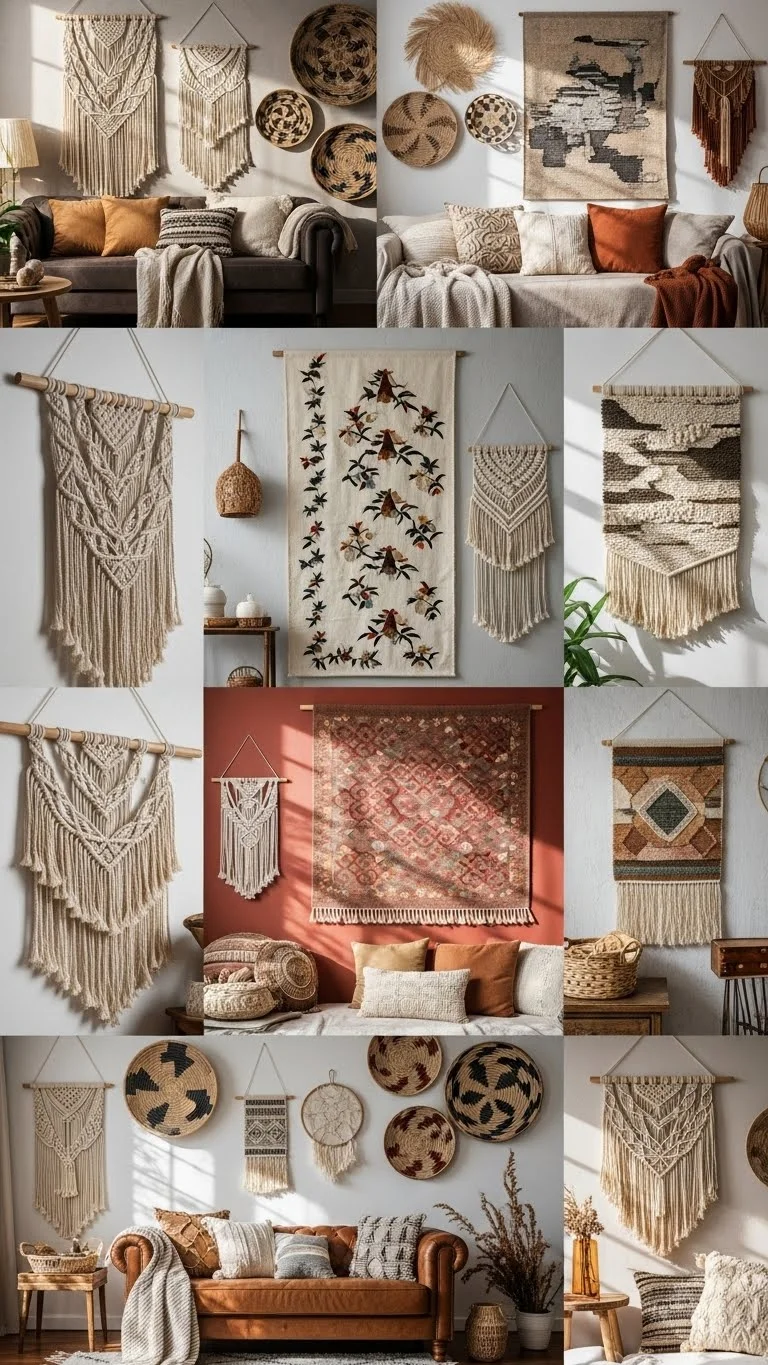
Textured walls add depth without painting or major changes. Fabric hangings, woven baskets, or framed textiles create interest while staying removable. This works well for renters or anyone avoiding permanent updates. Look for items you already own. Scarves, table runners, or handmade pieces can be framed or hung neatly. Stick to a limited color range to keep the wall calm. Arrange pieces with space between them. Crowding removes the soft effect. A single large piece can be just as effective as several smaller ones. Textured wall elements also help soften sound in rooms with hard surfaces. They add warmth visually and physically, making spaces feel more comfortable without much cost or effort.
- Plants That Add Life Without Fuss
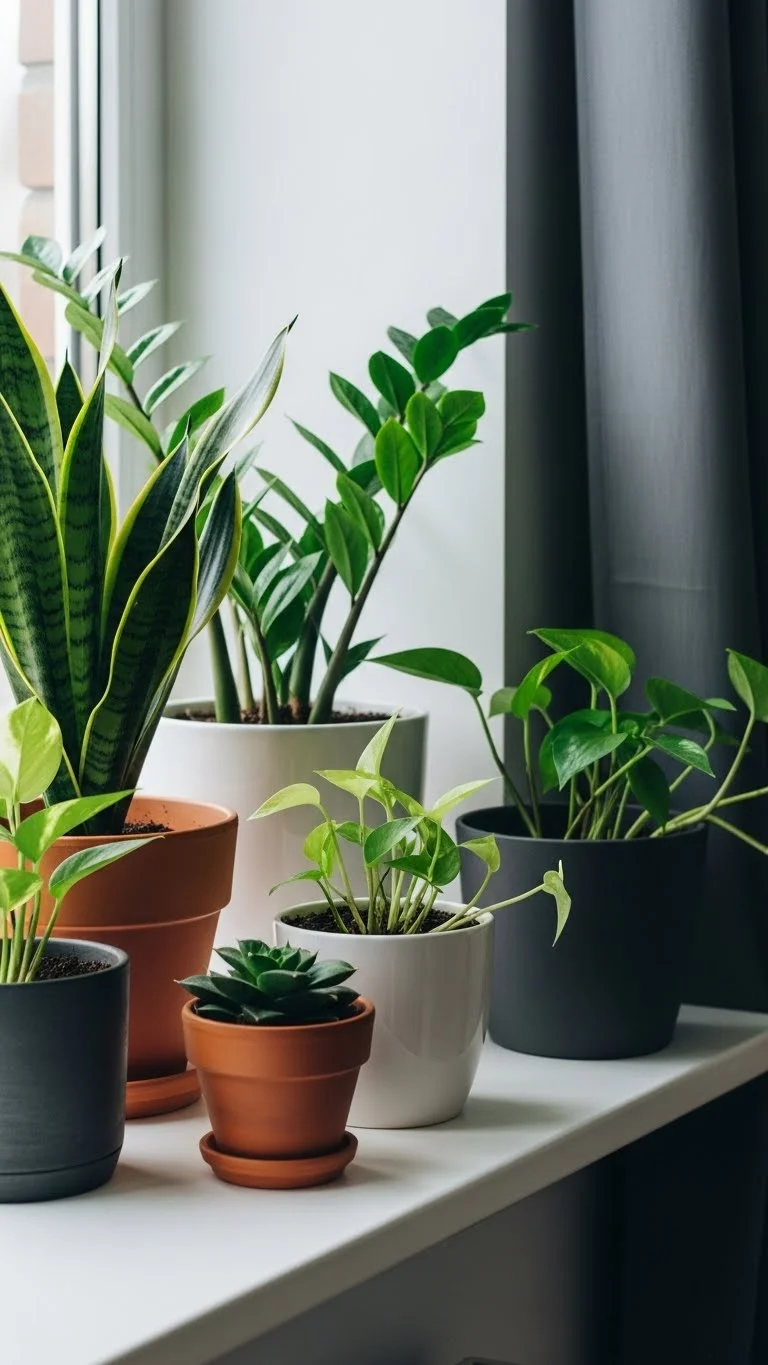
Plants bring life into a room and help spaces feel welcoming. You don’t need many. One or two well-placed plants can make a clear difference. Choose easy-care options like photos, snake plants, or peace lilies. Use simple pots that match your décor. Neutral or natural finishes work well and don’t distract from the plant itself. Place plants near windows where they get gentle light. If real plants feel hard to maintain, start small. Even one plant builds confidence. Faux plants can also work in low-light areas when chosen carefully. Water plants on a simple schedule and wipe leaves occasionally. Healthy plants add softness and warmth, making rooms feel more relaxed and lived-in.
Conclusion
Cozy and stylish rooms don’t come from expensive furniture or big changes. They grow through small, thoughtful updates that fit daily life. Simple lighting, soft textures, personal items, and smart layout choices shape spaces that feel comfortable and welcoming. Start with one idea that feels easy. Use what you already own. Make small adjustments over time. These room decor ideas help create spaces that support rest, connection, and everyday comfort without strain on your budget.
